
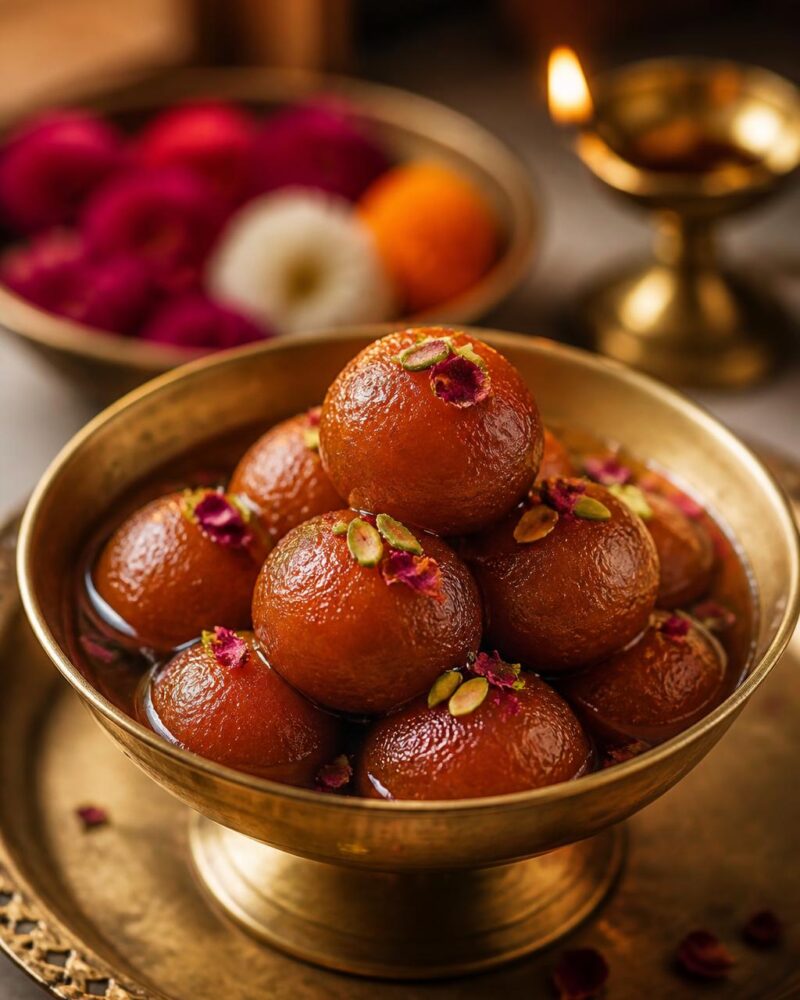
Gulab jamun is India’s most beloved festive sweet, a warm, syrup-soaked dumpling made from khoya, the reduced milk solids at the heart of Indian confectionery. The name comes from the Persian words for rose and berry, a nod to the rose-scented syrup in which the golden dumplings soak. No wedding, Diwali, or family celebration in North India is complete without them.
Spongy, syrup-soaked, and unapologetically sweet
These little dumplings are crisp-edged and cloud-soft within, absorbing the fragrant sugar syrup until they are almost translucent with sweetness. Rose water and cardamom perfume every bite, while a sliver of pistachio adds a welcome crunch. Served warm, they are pure indulgence, the dessert that makes everyone close their eyes and smile. The syrup is what gives them their magic, perfuming the dumplings with rose and cardamom and keeping them moist for days. They are surprisingly simple to make once you get the feel of the dough, and homemade versions are far superior to anything from a box.
Key ingredients
- Khoya (mawa): reduced milk solids — the traditional base; milk powder with a little milk is a reliable shortcut.
- All-purpose flour and a pinch of baking soda: the binder and the rise.
- Ghee: for frying and richness.
- Sugar, water, cardamom, and rose water: the soaking syrup.
- Saffron and pistachios (optional): the festive finish.
Tips for perfect gulab jamun
Knead the dough gently — just until it comes together; overworking makes the balls hard. Roll smooth, crack-free balls about the size of a small marble; any crack will open during frying. Fry over low heat in ghee, turning constantly, until deep golden brown — high heat burns the outside while the inside stays raw. The syrup should be warm (not boiling) and light — about one-thread consistency — and the fried balls soak in it for at least 2 hours, absorbing until they are plump and glossy. Serve warm or at room temperature.
Variations and storage
Stuff each ball with a pistachio or a pinch of saffron before frying, or add a splash of rose water to the syrup. Gulab jamun keep 3 to 4 days in the fridge in their syrup and reheat gently — they are best served warm.
Craving more? Explore all North Indian Kitchen recipes.




Join the conversation
Only members can comment — it takes a few seconds to create a free account.
Log in Create an account