
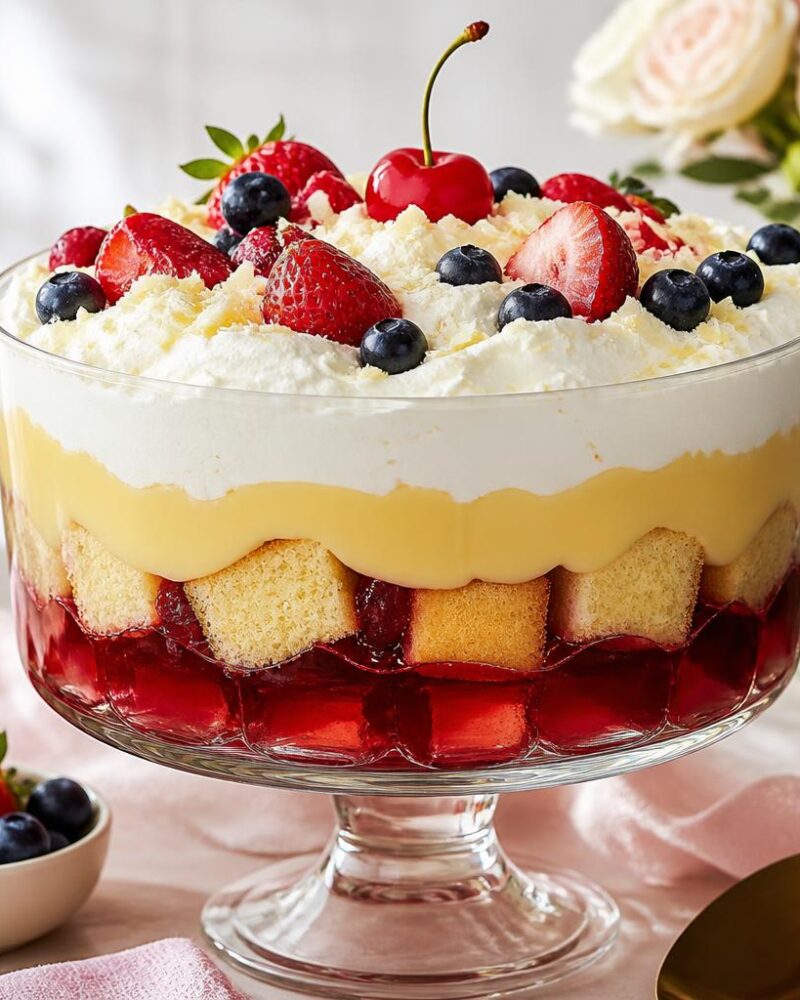
Trifle is the British dessert of glorious excess — layers of sponge cake soaked in sherry, fruit and jelly, silky custard, and whipped cream, stacked in a glass bowl so every layer shows. It has been a British favorite since the 16th century, and every family has its own tradition: trifle for Christmas, trifle for birthdays, trifle with the good sherry and the homemade custard. It is the dessert that rewards patience and punishes shortcuts.
Why this recipe works: The trifle is built on contrast and absorption: the sponge soaks up the sherry and fruit juices, the jelly adds a bright, wobbly layer, the custard brings richness, and the cream crowns it all. Built in a deep glass bowl, it is as beautiful as it is delicious. It needs time to rest so the layers meld — a trifle made ahead is a better trifle.
Key ingredients
- Sponge cake or ladyfingers: the base — stale is fine, it soaks better.
- Sherry (or fruit juice): the classic soak.
- Fruit and jelly: berries, peaches, or raspberry jelly — the bright layer.
- Homemade custard: thick and vanilla-scented.
- Whipped cream: the crowning cloud.
Tips for the perfect trifle
Line the bottom of a glass bowl with sponge and brush it generously with sherry — it should be moist but not swimming. Let the jelly set firm, then layer it over the fruit. Use thick, properly set custard, and let each layer cool completely before adding the next so they do not bleed into each other. Finish with whipped cream, and chill for at least 4 hours — overnight is better — so the flavors meld. Decorate with berries, nuts, or chocolate shavings before serving.
Variations and storage
Add a layer of lemon curd, use chocolate sponge, or swap the sherry for Madeira or a fruit liqueur. Trifle keeps 2 days in the fridge, covered — though the cream softens, the flavor only deepens.



Join the conversation
Only members can comment — it takes a few seconds to create a free account.
Log in Create an account