
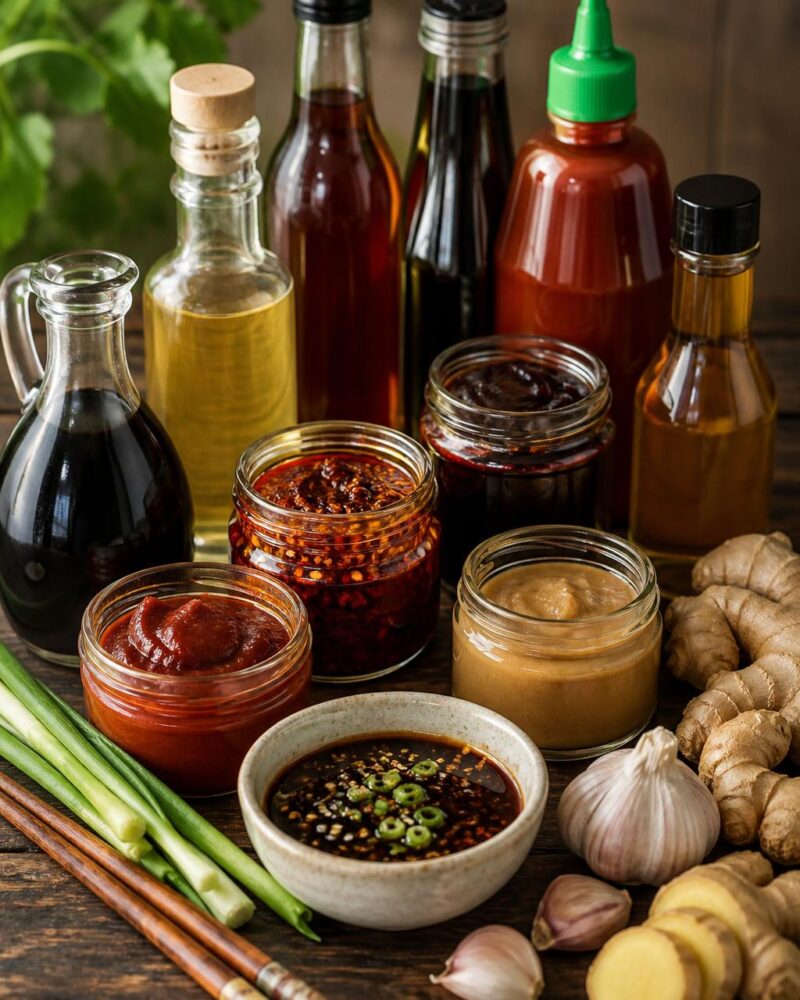
Walk into any Asian grocery store and the wall of bottles can be intimidating. I remember my first trip — I left with three kinds of soy sauce and no idea which one belonged where. Years of cooking recipes like my pad thai and mapo tofu taught me that Asian food leans on a small group of repeat players. Learn these bottles and jars, and you can cook most of the recipes on this site with confidence. Here is what each one is, what it tastes like, how to store it, and what to grab when you run out.
The Salty Fermented Workhorses
These three are the foundation of a well-stocked pantry. They all deliver deep, savory salt in slightly different ways, and together they explain most of what Asian food tastes like.
Soy Sauce
Soy sauce is fermented soybeans, wheat, and salt — savory, salty, and quietly sweet. Regular light soy sauce is the all-purpose workhorse; dark soy sauce is aged longer, sweeter, and used for color in braises. If you cook a lot of Chinese food, keep both kinds on hand. It keeps for months in a cool cabinet, no fridge required. Out of it? A splash of fish sauce with a pinch of sugar is the closest stand-in. It does the heavy lifting in my dan dan noodles and kung pao chicken.
Fish Sauce
Fish sauce is anchovies and salt, fermented for months into a golden liquid that tastes savory, not fishy. It is the salt of Southeast Asia — a teaspoon in pho or pad thai unlocks depth you cannot get any other way. Refrigerate it and it keeps for a year. Substitute soy sauce plus a squeeze of lime in a pinch, then buy the real thing.
Oyster Sauce
Thick, glossy, and sweet-salty, oyster sauce is reduced oyster extract with sugar and soy. A spoonful turns plain vegetables into the dish everyone asks about — it is essential in char kway teow and wonton noodles. Refrigerate after opening. If you are out, hoisin mixed with a splash of soy sauce comes close, and vegetarian versions are easy to find.
Miso
Miso is fermented soybean paste — salty, savory, and nutty, with sweetness that grows as the color lightens. White miso is mild; red miso is bold. A spoonful melts into soups, marinades, and glazes. Keep it in the fridge, where it lasts for months. No miso? A spoonful of soy sauce with a pinch of brown sugar will get a soup through dinner, though it will not be as rich.
Sweet and Sticky
These are the sauces that round out the salt, bringing gloss, sweetness, and body to a finished dish.
Hoisin Sauce
Hoisin is a thick, dark Chinese sauce made from fermented soybeans, garlic, five-spice, and sugar — sweet, salty, and faintly smoky. It is the classic companion to roast duck and a great way to round out sweet and sour pork sauces. Refrigerate after opening. Substitute a blend of peanut butter, soy sauce, and honey when you run out.
Kecap Manis
Kecap manis is Indonesia’s sweet soy sauce — thick, dark, and syrupy, made from soy sauce and palm sugar. It is the defining flavor of nasi goreng and a key player in chicken satay marinades. Store it in the cabinet; it keeps for months. Substitute soy sauce simmered with brown sugar until syrupy.
Mirin
Mirin is sweet Japanese rice wine, low in alcohol, used as a mild, glossy sweetener in teriyaki chicken glazes and simmered dishes. Keep it in a cool cabinet; it does not spoil quickly. No mirin? Mix dry sake or white wine with a pinch of sugar to taste.
Sake
Sake is Japanese rice wine, and a splash in the pot does real work — it tames strong smells, adds gentle sweetness, and lifts tonkotsu ramen broths and teriyaki glazes alike. Store unopened bottles in a cool, dark spot; once open, refrigerate and use within a few weeks. Dry white wine is the easiest substitute.
Heat and Aromatics
Where the workhorses bring salt, these bring fire — the fastest way to make a plain dish exciting.
Chili Crisp
Chili crisp is crunchy fried chili flakes and aromatics suspended in hot oil — spicy, savory, and dangerously snackable straight off the spoon. It belongs on noodles, eggs, and dumplings, and it makes my dan dan noodles and mapo tofu sing. Keep it in the cabinet; the oil protects it for months. Out? Chili oil with a pinch of salt and a few toasted sesame seeds is close enough.
Gochujang
Gochujang is Korea’s fermented chili paste — thick, brick-red, and balanced between sweet, salty, and spicy. It is the soul of kimchi bokkeumbap and a star in bulgogi marinades. Refrigerate after opening; it keeps for a year or more. Substitute sriracha mixed with a little miso when you are in a bind.
Sambal
Sambal is the catch-all name for Indonesian and Malaysian chili sauces and pastes; the best known is sambal oelek, a simple paste of ground chilies, salt, and vinegar. It adds clean heat to nasi goreng and char kway teow. Refrigerate after opening. Any chili-garlic sauce or sriracha can stand in, brightened with a splash of vinegar.
Curry Pastes
Curry pastes are ready-made blends of chilies, garlic, lemongrass, galangal, and spices pounded into a fragrant paste. Thai red, green, and yellow are the ones to start with — a spoonful fried in oil becomes an instant sauce base, and it is a common secret in chicken satay marinades. Refrigerate after opening and use within a few months. No paste? Grind garlic, ginger, and chili with your favorite curry powder and a little oil.
Vinegar and Oil: The Finishers
Every good dish needs a last touch. These two do that job better than anything else in the kitchen.
Rice Vinegar
Rice vinegar is mild, gently sweet, and far less sharp than Western vinegars. Seasoned versions, already sweetened, are the key to maki sushi rolls rice and bright japchae-style dressings. It keeps in the cabinet indefinitely. Substitute white wine vinegar with a pinch of sugar — but for sushi rice, the real thing matters.
Toasted Sesame Oil
Toasted sesame oil is dark amber with a nutty, toasty aroma, and it is a finisher, not a cooking oil — add it at the end. A drizzle transforms japchae, bulgogi, and kimchi fried rice instantly. Store it in a cool, dark cabinet or the fridge; it turns rancid if it sits in warmth. Substitute untoasted sesame oil with a few toasted seeds, though it will not be the same.
You do not need a cupboard full of bottles. Most of my weeknight dinners lean on the first few sauces in this guide — soy sauce, fish sauce, oyster sauce, and sesame oil — and I add bottles as recipes ask for them. If you want to cook your way through the region, my Asian kitchen page collects every recipe these sauces star in, from pho and Hainanese chicken rice to bulgogi and teriyaki chicken.



Join the conversation
Only members can comment — it takes a few seconds to create a free account.
Log in Create an account